SHAPING THE FUTURE OF WORK THROUGH TALENT SUPPLY CHAIN MANAGEMENT
Prepare for the Future of Work by aligning workforce strategy with the rapid changes.
Through advanced tools, AI-driven insights, and expert consultancy, we equip leaders to anticipate change, adapt skillsets, and build future-ready teams.

WHAT IS THE FUTURE OF WORK?
The Future of Work is not in the future; it is happening now. The World Economic Forum states that it is not just about machines taking over jobs, but about technology helping to achieve more, a view which we follow. Tools such as AI are reshaping the way we work, not to replace us, but to support us. As a result, roles are shifting to focus more on creativity, flexibility, emotional intelligence, ethics, and leadership. In this upcoming era, people and machines will need to work together even more, with adaptation and change playing a key role.
Looking ahead, the forecasted numbers are clear. Between now and 2030, many roles will disappear. However, a lot of new ones will open up, especially in areas such as AI, cybersecurity, sustainability, and healthcare. It is not just about getting hired in these new fields; it is about being prepared. Succeeding companies will be those aligning their strategies with the skills of the future.
However, change does not happen on its own. The real threat is not automation; it is standing still. About two-thirds of companies say that the biggest challenge they face is a lack of the right skills. Additionally, nearly 60% of the existing employees will need new skills in the years to come. As AI is taking over routine tasks, only the companies that can adapt will survive the impending changes. For leaders such as CEOs and CHROs, reskilling is not only a cost, it is a smart investment in growth.
That is where Strategic Workforce Planning becomes essential. It is like a GPS to navigate the changing work field. It helps you know when to bring in AI, how to reshape roles, and where to grow the skills of your team. Companies that plan and execute well avoid mistakes and stay ahead.
We believe the future belongs not to the fastest, but to the best prepared, not too fast, not too slow. We work with leaders to build smart, flexible workforce plans based on real data and long-term thinking. Let’s shape the Future of Work together!
WHY IS THE FUTURE OF WORK IMPORTANT?
The Future of Work is not just a concept; it is a call to action. It marks big changes in how businesses are run, which skills they need, and what kinds of roles they offer. As automation, AI and global supply chain changes reshape the world, being well-prepared will set successful companies apart. We see the Future of Work as a catalyst to help organizations lead the way by turning change into a plan for growth and innovation.

This preparation opens the door to new opportunities, especially in fast-growing areas such as AI, clean energy, care, and many others. These fields are expanding quickly, while routine roles are automated. That is why training and learning new skills and competencies are essential. With many skills likely to change by 2030, smart companies are already updating their talent roadmaps.
On the other hand, ignoring these changes can come at a high cost. Companies that fail to adapt will cease to exist. Over two-thirds of employers already state that skill gaps are their biggest challenge. Without action, this can lead to job redundancies, low employee morale, and top talent moving to more future-ready companies. Preparing for the future helps protect against big risks and sudden changes.
The good news? Getting ready for the Future of Work gives companies big advantages. They see higher employee engagement, faster innovation, and better market performance. Additionally, public policies are starting to support these efforts, with programs that help companies train their people and create greater value for everyone.
We believe getting ready for the Future of Work is a smart way to grow and evolve.

HOW DO WE APPROACH THE FUTURE OF WORK?
The Future of Work is a certainty, not a guess. Our approach is based on your workforce data, strategy and industry intelligence. We help organizations adapt, step by step, without feeling overwhelmed. Using insights from trusted sources like the World Economic Forum and the Davos “Intelligent Age” agenda, we offer paths forward. It starts with understanding where your workforce is today, and where it needs to go. Around a third of core skills are expected to change, and many roles will disappear completely.
TSCM: WHAT IS IT?
For decades, organizations have mastered the art of supply chain management for products and services, tracking inventory, forecasting demand, optimizing logistics, and building resilience against disruptions.
Yet when it comes to their most valuable asset, talent, many companies still operate reactively, scrambling to fill gaps only after they appear.
Talent Supply Chain Management (TSCM) changes that paradigm. It applies proven supply chain principles to workforce strategy, creating end-to-end visibility and control over how talent flows through your organization. From the moment you identify a future skill need to the day an employee transitions to their next role or retirement, TSCM ensures you have the right people, with the right capabilities, in the right place, at the right time.
Unlike traditional talent management, which often operates in silos (recruiting does its thing, L&D does theirs, workforce planning works separately), TSCM creates an integrated, predictive system. It's not just about filling today's vacancies; it's about architecting the talent flows that will power your business three, five, or ten years from now.
WHY TSCM MATTERS MORE THAN EVER
The Future of Work is not just a concept; it is a call to action. It marks big changes in how businesses are run, which skills they need, and what kinds of roles they offer. As automation, AI and global supply chain changes reshape the world, being well-prepared will set successful companies apart. We see the Future of Work as a catalyst to help organizations lead the way by turning change into a plan for growth and innovation.

Accelerating Disruption
AI, automation, and technological change are transforming roles faster than ever. The World Economic Forum estimates that 44% of workers' skills will be disrupted by 2027. Traditional reactive hiring can't keep pace; you need a proactive talent supply chain that anticipates and adapts.
Critical Skill Shortages
Over two-thirds of organizations report that talent shortages are their biggest constraint to growth. TSCM helps you identify bottlenecks in your talent pipeline before they become crises, and build alternative sourcing strategies, internal development, partnerships, and contingent talent, to ensure supply meets demand.
Hidden Inefficiencies
How much talent sits idle? How many people are overqualified for their roles? Where are your development programs producing skills you don't actually need? TSCM reveals these inefficiencies, helping you optimize talent ROI and reduce waste in recruitment, development, and retention spending.
Strategic Alignment
Business strategy changes, new markets, mergers, pivots, but workforce plans often lag behind. TSCM creates dynamic alignment, ensuring your talent supply chain can flex and reconfigure as your business strategy evolves, turning workforce agility from aspiration to reality.

TSCM FRAMEWORK
For 30 years, Supply Chain Management (SCM) has given leaders control over the cost, speed, and reliability of their products.
What SCOR did for SCM, TSCM does for the workforce.
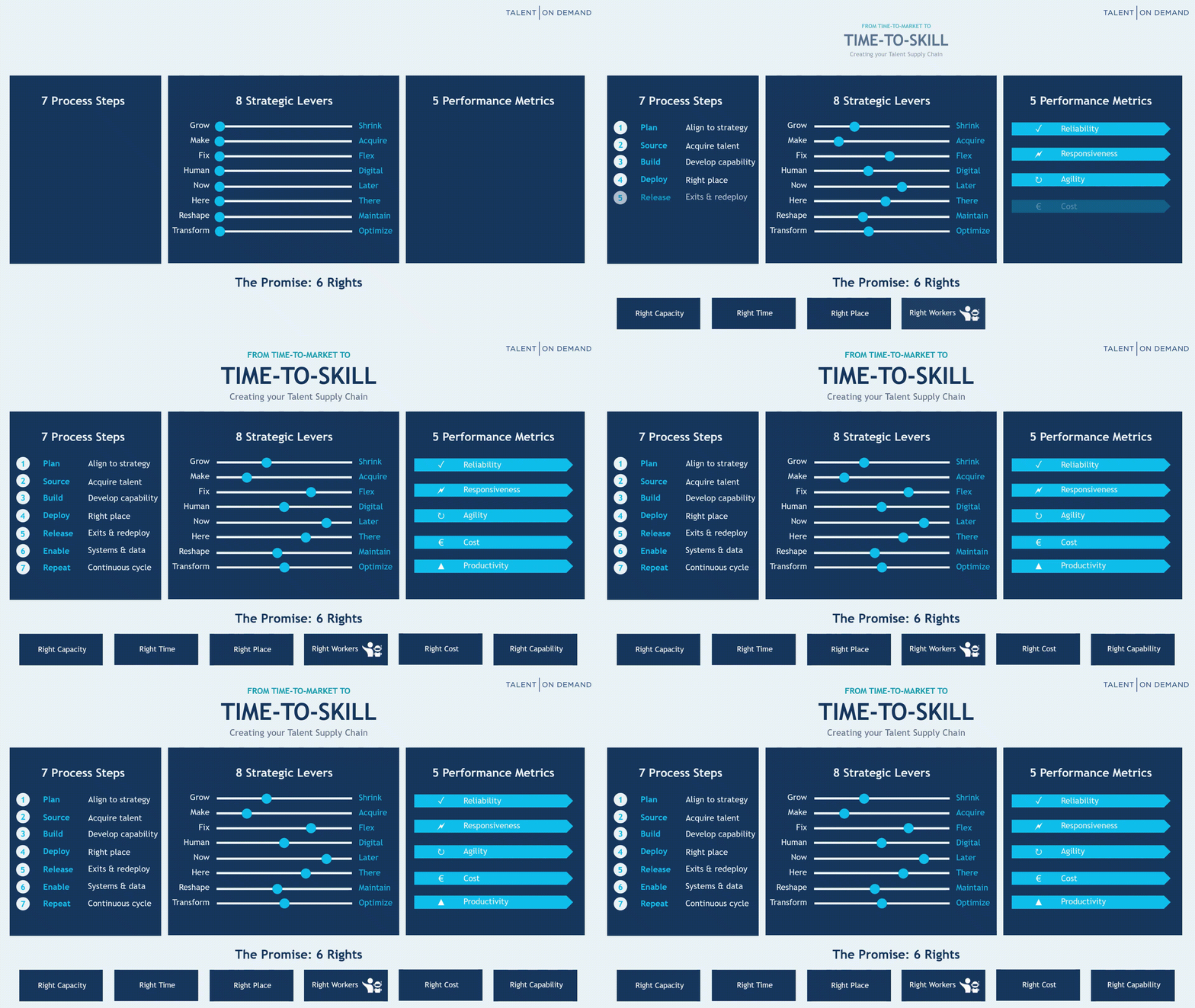
The framework consists of 8 Strategic Levers (the dials executives turn), 7 Process Steps (the operating rhythm), 6 TSCM Promises and 5 Performance Metrics (the C-suite dashboard).
The promise? Deliver the Right Workers, human and digital, at the Right time, in the Right place, at the Right cost, with the Right capabilities and capacities. As such, Time-to-Skill becomes visible, measurable, and manageable.
Our philosophy: Eat. Sleep. Plan. Repeat: because the world evolves and TSCM never stops.
FREQUENTLY ASKED QUESTIONS
How can companies approach the Future of Work effectively?
Companies can navigate the Future of Work through Strategic Workforce Planning. This involves assessing current skills, prioritizing roles, redesigning jobs to integrate AI, testing new approaches, and continuously evolving based on real data. It’s a structured, step-by-step method that turns uncertainty into sustainable growth.
Will AI and automation take away all jobs?
Not all jobs will disappear; many will evolve. AI and automation are expected to handle routine tasks, while human roles will shift toward creativity, critical thinking, emotional intelligence, and leadership. New job opportunities are already growing in fields like AI, sustainability, and healthcare.
What risks do companies face if they don’t adapt to workforce changes?
Companies that ignore workforce shifts risk falling behind due to skill gaps, lower innovation, and loss of top talent. As technologies and market demands evolve, failing to invest in reskilling or role redesign can lead to redundancies, low morale, and poor business performance.
What steps can organizations take to future-proof their workforce?
Organizations can future-proof their workforce by applying Strategic Workforce Planning. This includes assessing current capabilities, prioritizing key roles, redesigning jobs with AI in mind, testing new roles through pilot programs, and regularly updating plans to stay aligned with ongoing changes.